While the Scene Editor is the "skeleton" of your industrial design, the Real-Time Simulation Engine is its "nervous system." It provides the live, high-fidelity data processing and visual feedback that turn a static diagram into a responsive digital twin.
In Velnode, "Real-Time" isn't just a marketing term—it means your simulation operates at the speed of industry.
1. High-Fidelity Visual Dynamics
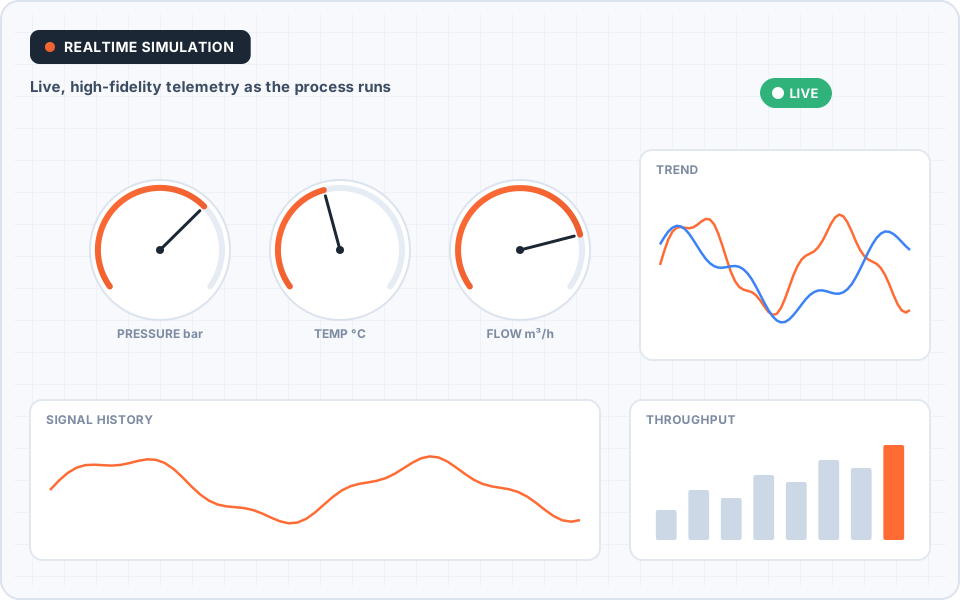
We utilize advanced 2D/3D-style graphics (powered by the Phaser 3 engine) to ensure that the simulation doesn't just calculate data—it visualizes it.
- Animated Process Flow: Watch as fluids move through pipes, steam rises from heat exchangers, and conveyors transport goods. The speed and color of these animations are tied directly to real physics (e.g., faster flow rates equal faster animation speeds).
- Active Feedback Loops: If a pressure relief valve (PRV) pops or a motor trips, you see the visual alarm and the mechanical reaction instantly. This provides an intuitive "feel" for the process that raw data tables cannot match.
- Sub-Second Latency: Using Server-Sent Events (SSE) and optimized WebSockets, state changes in the backend are pushed to your browser in milliseconds, ensuring that what you see on the screen is perfectly synchronized with the underlying mathematical model.
2. Multi-Paradigm Simulation Engines
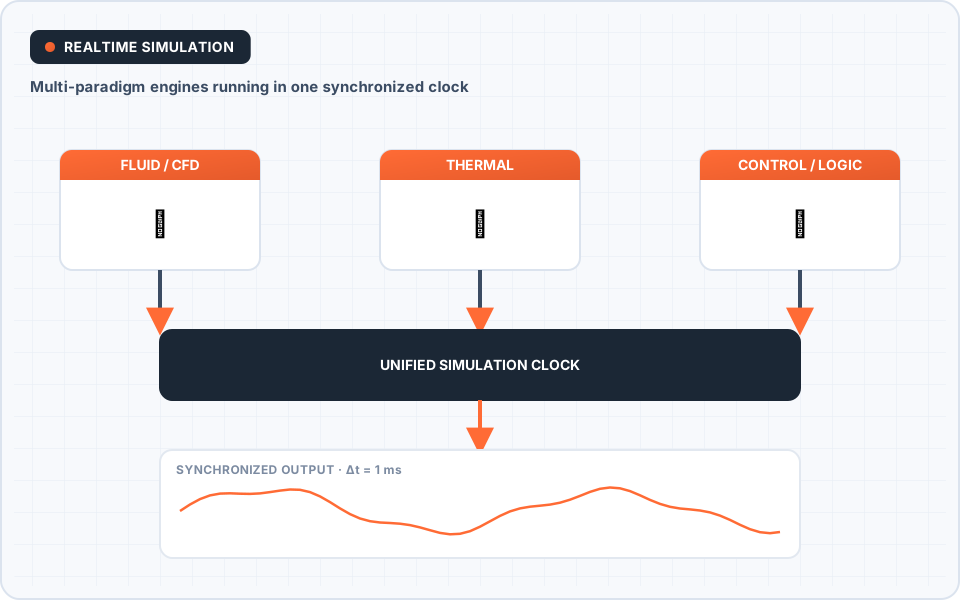
Industrial systems are complex because they often require different ways of thinking. Velnode integrates three core computational paradigms:
- Discrete Event Simulation (DES): Perfect for modeling "step-by-step" processes like a bottling line, a sorting facility, or a logic-heavy batch reactor where specific events trigger the next stage.
- Continuous Simulation: Necessary for fluid dynamics and thermodynamics. It calculates the steady-state and transient behavior of liquids and gases—essential for separation trains and HVAC loops.
- Agent-Based Modeling (ABM): Used for advanced scenarios where individual components (the "agents") have their own internal logic and interact with others, allowing for the simulation of complex, emergent behaviors in large-scale industrial ecosystems.
3. The "Virtual Commissioning" Environment
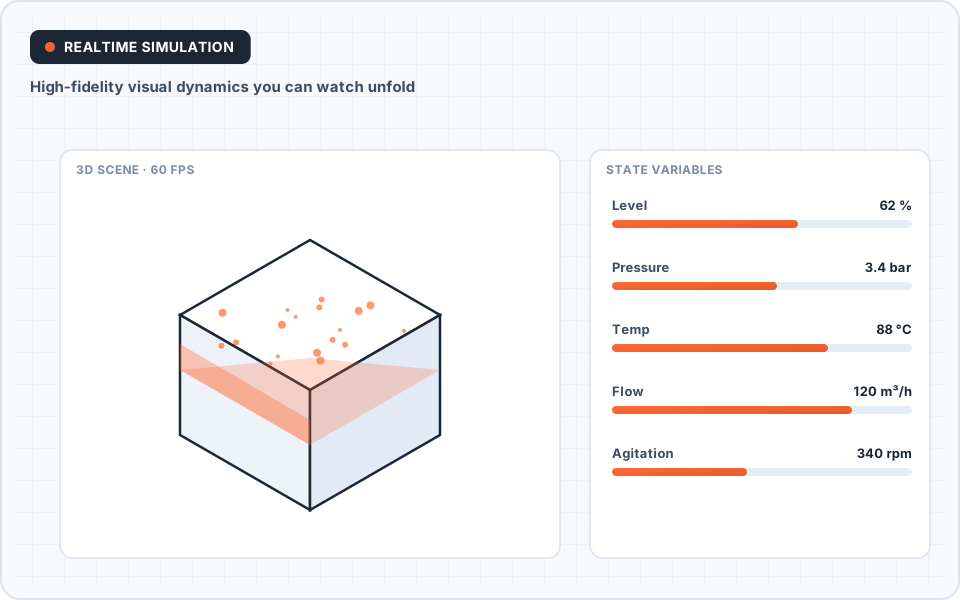
Real-time simulation allows for Virtual Commissioning, the process of testing your control logic before you ever buy a piece of hardware.
- Logic Stress-Testing: Ramp up the heat or close a critical valve to see how your automated PID controllers react. Can your system handle a surge, or will it fail?
- "What-If" Analysis: In a single click, you can change the viscosity of the fluid or the ambient temperature of the plant. The simulation re-calculates the entire process in real-time, showing you the ripple effect across the whole facility.
- Fault Injection: Manually "break" a pump or "clog" a filter to train operators on how to handle emergencies in a 100% safe, virtual environment.
The Velnode Advantage: No More "Black Boxes"
Traditional simulation software often feels like a "black box"—you put numbers in and get a chart out. Velnode breaks this barrier by making the simulation interactive and observable. By seeing the logic live, engineers and students move from "understanding the theory" to "mastering the operation."
It isn't just a simulation of a plant; it is a living, breathing digital duplicate that responds to your touch.