If the Scene Editor is the skeleton and the Real-Time Simulation is the nervous system, Velnode’s Collaborative Spaces act as the shared control room. Industrial engineering and technical education are rarely solo endeavors. In the real world, systems are designed, operated, and debugged by teams.
Velnode brings the seamless, real-time collaboration of modern SaaS tools (think Google Docs or Figma) directly into the realm of industrial automation and simulation.
1. "Multiplayer" Engineering
In traditional desktop simulation software, files are emailed back and forth, leading to version control nightmares and siloed work. Velnode’s cloud-native architecture changes this entirely.
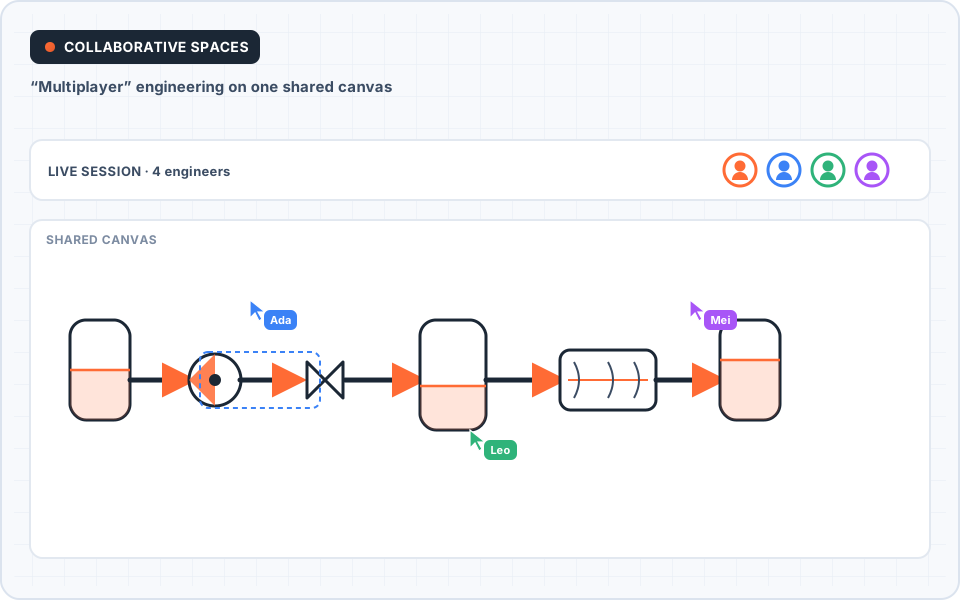
- Live Co-Creation: Multiple users can inhabit the same canvas simultaneously. You can watch a colleague route piping on one side of the screen while you configure the PID controller logic on the other.
- Live Cursors & Component Locking: See exactly where your team members are working in real-time. If someone is editing the parameters of a specific 3-phase separator, that component temporarily "locks" to prevent conflicting edits, ensuring smooth teamwork.
- Instant Synchronization: When a teammate changes a variable—like increasing the setpoint of a tank—the physics engine updates globally, and everyone in the workspace sees the fluid level rise instantly.
2. Dynamic Role-Based Environments
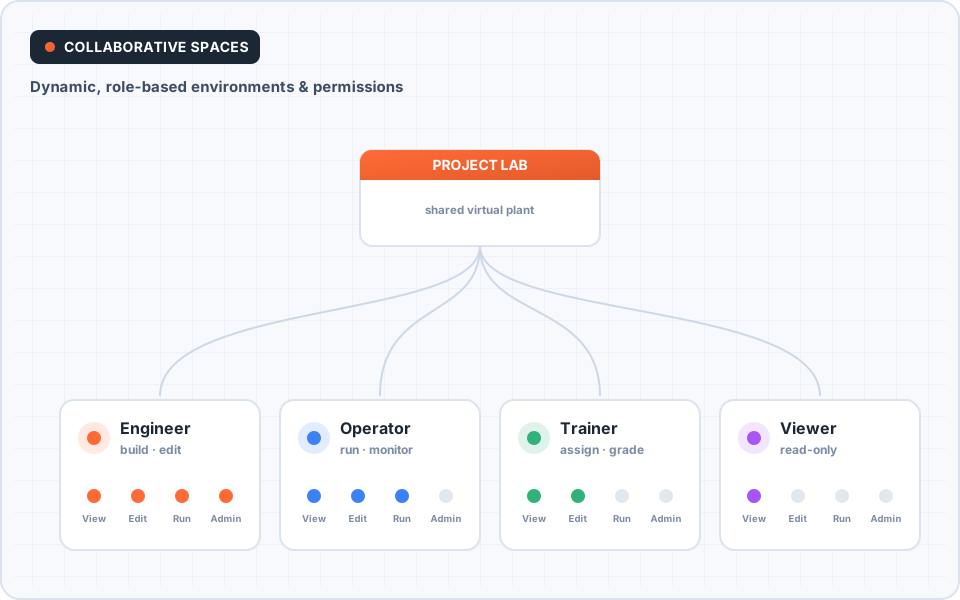
Because Velnode serves both high-level professional R&D and institutional education, the workspace adapts to who is using it.
- The Instructor / Lead Engineer View: A project lead can set up a base simulation, lock fundamental architectures, and hide specific backend variables.
- Live Fault Injection: For training scenarios, an instructor or senior engineer can trigger a hidden fault (e.g., a "stuck" valve or a sudden pressure drop) from their dashboard. The rest of the team or class must collaborate in real-time to diagnose and resolve the issue on the live canvas.
- The Operator / Student View: Users interact with the system under the constraints set by the lead, learning to troubleshoot and operate within a defined, safe sandbox.
3. "Forking" Reality: Branching & State Management
Engineering requires testing multiple solutions to a single problem. Velnode makes this intuitive and non-destructive.
- Simulation Snapshots: You can save the exact state of a live, running simulation at any given millisecond.
- Branching (Forking): Imagine your team has built a stable separation train, but you want to see if a cheaper, smaller pump will still handle the load. You can "fork" the workspace—creating a parallel universe of your simulation. You test the new pump in Branch B while Branch A remains untouched. If it works, you merge the idea back into the main project.
The Bottom Line
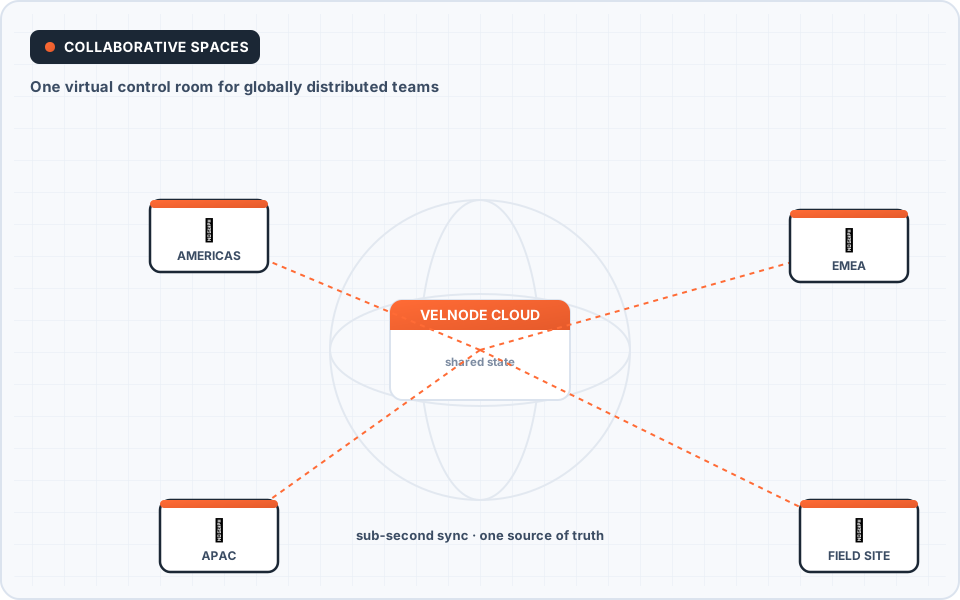
Velnode’s Collaborative Spaces eliminate the geographical and technical silos that slow down innovation. It allows a subject matter expert in Lagos, a software developer in London, and a student in a remote classroom to stand shoulder-to-shoulder in the same digital plant, interacting with the same physical laws.
It transforms engineering from an isolated task into a synchronized, global dialogue.